The most important news selected by the BSTA newsletter team for this week.
Authors:
Giorgio Bertucci
Costanza Franzinelli Socini Guelfi
Guia Roberta Moretti
Letizia Nastasi
Maria Zhukovskaya
Beyond the Runway: How a $50 Million Bra Creates Brand Value
What if the most valuable product a company creates is one it never intends to sell? Victoria's Secret's iconic Fantasy Bra offers a fascinating example of how extraordinary luxury assets can become powerful instruments of marketing, brand positioning and financial value creation.


Since its introduction in 1996, when Claudia Schiffer presented the first $1 million Fantasy Bra, the concept has embodied exclusivity and extravagance. In 2000, Gisele Bündchen wore the legendary Red Hot Fantasy Bra, valued at $15 million, setting a record that remained unbeaten for over two decades.
However, the 2026 Victoria's Secret Fashion Show marked a new milestone. After an eight-year absence, the Fantasy Bra returned on October 18, worn by Kylie Jenner and created in collaboration with luxury jeweler Jacob & Co. Featuring 4,410 natural diamonds and a spectacular 75.54-carat yellow diamond, the piece reached a reported valuation of $50 million, becoming the most expensive Fantasy Bra in the brand's history.
From a marketing perspective, the Fantasy Bra represents an exceptional example of the halo effect. By associating its commercially accessible lingerie with multimillion-dollar jewelry, Victoria's Secret elevates its perceived prestige, transforming ordinary products into symbols of aspiration and exclusivity.

The strategy also relies heavily on celebrity endorsement and earned media. Choosing Kylie Jenner, whose influence extends far beyond the fashion industry, allowed the company to reach a broader audience and generate global attention. Victoria's Secret's Chief Creative Officer described Jenner's cultural influence as a key reason behind her selection.
Rather than functioning as a conventional product launch, the Fantasy Bra becomes a media spectacle, generating publicity, social engagement, and brand awareness. Its extreme valuation is itself a marketing tool: the higher the price, the greater the curiosity and potential media exposure.
Financially, the Fantasy Bra presents an interesting paradox. Its $50 million valuation does not necessarily represent a $50 million investment by Victoria's Secret, nor does it imply that the company expects to recover this amount through a sale.
Instead, the economic rationale lies in the potential return generated through increased brand visibility, stronger customer engagement, and incremental lingerie sales. Its effectiveness should therefore be evaluated through marketing metrics such as customer acquisition costs, conversion rates, incremental revenue, and return on marketing investment.
The initiative also forms part of Victoria's Secret's broader efforts to restore its competitive positioning. The company reported $6.55 billion in annual net sales, a 5% increase compared with 2024, alongside a 5% increase in comparable sales. Although these figures precede the 2026 Fantasy Bra campaign and cannot demonstrate its financial impact, they provide context for the company's ongoing commercial recovery.
Ultimately, the Fantasy Bra illustrates a fundamental principle of the trophy asset market: value is not determined exclusively by the price an asset can command, but also by the intangible benefits it generates. In Victoria's Secret's case, diamonds are not simply luxury materials; they become instruments of storytelling, brand differentiation, and potentially long-term economic value.
From the 918 Spyder to the Mission S
On October 15, Porsche unveiled the Mission S in New York, marking its return to the supercar segment more than a decade after the legendary 918 Spyder. Presented on the same Queens pier where the iconic 550 Spyder was photographed in 1953, the concept previews a new mid-engined supercar positioned above the 911.


With a driver-focused interior, a minimalist design and a combination of analogue and digital controls, the Mission S reflects Porsche's ambition to reconnect with its sporting heritage. However, its most significant innovation may not be technological. The new supercar is intended to become a permanent part of Porsche's lineup rather than a limited-production hypercar.
This marks a notable departure from the strategy behind the 918 Spyder, unveiled in 2013 and widely regarded as one of Porsche's greatest engineering achievements. Combining a naturally aspirated V8 with two electric motors, the hybrid hypercar delivered 887 horsepower. Yet, beyond its remarkable performance, one characteristic helped establish its exclusivity: only 918 units were ever produced.
When Porsche opened orders in 2011, the 918 Spyder carried a starting price of $845,000 in the United States. Since then, its market value has risen substantially: according to Old Cars Data, the median auction price rose from $1.43 million in 2018 to $2.6 million in 2025, representing an increase of approximately 82%. In 2026, the preliminary median has reached $3.09 million, although this figure is based on just four recorded sales.
Individual transactions have been even more striking. In January 2026, a Pure Orange 918 Spyder Weissach sold for a record $6.05 million and in April 2026, a Riviera Blue 918 Spyder Weissach sold for $4.68 million at auction. While these figures reflect differences in mileage, specifications and condition, they highlight the growing appeal of the 918 Spyder as a collectible asset.

Although these transactions involve different vehicles and cannot be interpreted as direct investment returns, they illustrate how scarcity, historical significance and collector demand can push valuations far beyond original retail prices.
The Mission S, however, introduces a different economic approach. Under its recently announced Sportwagenschmiede '35 strategy, Porsche is prioritising "Value over Volume", aiming to strengthen profitability through higher-end models, greater personalisation and increased exclusivity.
The 918 Spyder benefited from a fixed supply that could never expand to meet growing demand. The Mission S, by contrast, is intended for continuous production, potentially allowing Porsche to reach more customers while maintaining its premium positioning.
The challenge will therefore be to preserve desirability without relying on a predetermined production limit. Exclusive configurations, craftsmanship and brand heritage may help sustain demand, but they cannot guarantee future appreciation.
A Roman Torso Rewrites the Antiquities Record

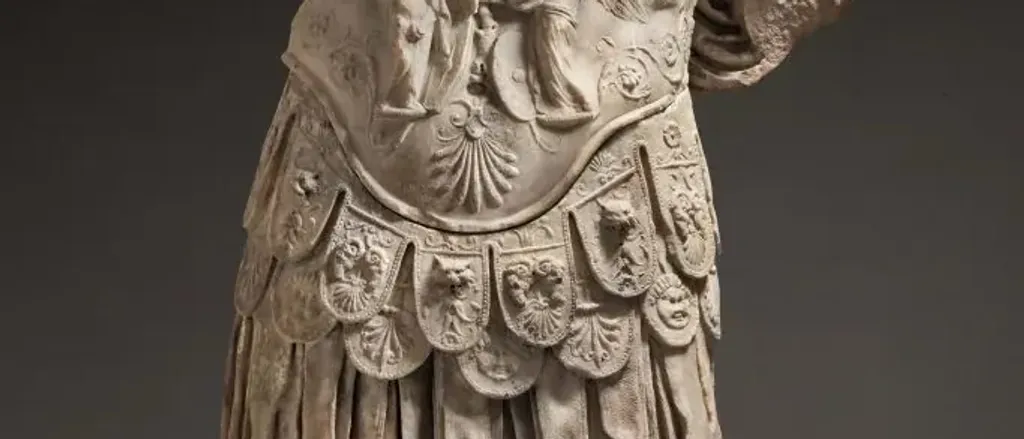
It took fourteen minutes and five determined collectors. On October 21, 2026, at Sotheby’s New York, a Roman marble torso of an emperor finally sold for $34.3 million, including buyer’s premiums. The result sets a new auction record for a Roman antiquity. The sculpture, a highlight of the Magnum Opus sale, had been expected to fetch between $8 and $12 million, so the final price landed at roughly three to four times the presale estimate.
The piece itself helps explain the competition. Standing 110 centimetres tall and dating to the first half of the first century AD, in the Julio-Claudian period, it depicts an emperor wearing an elaborately decorated cuirass. The reliefs carry a message of power and legitimacy: the sun god Sol drives a four-horse chariot, while two Victories flank a trophy. It is imperial imagery carved in stone, and it has travelled well through time. Traditionally associated with the ancient city of Salona, in present-day Croatia, the torso has a documented collecting history reaching back to the mid-nineteenth century. It has also been exhibited at the Metropolitan Museum of Art, Yale University Art Gallery and the Getty Museum.
The result is even more notable because this was not the torso’s first appearance at auction. The same piece sold for approximately $7.4 million in 2010, which means the latest price is about 4.6 times higher after sixteen years. It also surpasses the $28.6 million achieved in 2007 by a bronze sculpture of Artemis and a stag, which had stood as the benchmark for Roman antiquities. The new record exceeds that figure by roughly 20%.
For the trophy asset market, the sale illustrates how artistic quality, documented provenance and museum recognition can combine in a single object. Where few comparable alternatives exist, these attributes tend to intensify competition among bidders, as ownership carries cultural prestige as well as financial value. In this case, the length of the bidding contest and the gap between estimate and final price reflect that dynamic.
Some caution is nonetheless appropriate when reading the figures. A single exceptional sale does not establish a broader upward trend across the antiquities market, and this result should be seen as specific to an object with a rare combination of characteristics. Likewise, the difference between the 2010 and 2026 prices does not represent the seller’s net investment return. A proper assessment would require accounting for transaction fees, conservation costs and inflation over the holding period.

The Bugatti Premium: Does Luxury Branding Increase Liquidity or Investment Risk?

Three apartments at Bugatti Residences by Binghatti in Dubai’s Business Bay sold in October at prices ranging from AED 4,075 to AED 9,741 per square foot, according to Dubai Land Department transaction records reproduced by Heartbeat Homes. The highest rate was about 2.4 times the lowest, though all three units are in the same development.

The spread raises a question for anyone who values trophy assets: does a luxury name create lasting investment value, or only a high price on the day of the first sale?
A trophy asset derives value not only from its physical characteristics but also from what ownership signals: exclusivity, prestige and scarcity. Binghatti announced the project with 171 Riviera Mansions and 11 Sky Mansion penthouses, so the top tier is about 6% of the announced units. Its architecture, custom interiors and private car lifts are meant to carry Bugatti’s hypercar identity into residential ownership.
The top of the market reflects that. A 47,201-square-foot penthouse was registered at AED 550 million in December 2025, or about AED 11,652 per square foot, according to Heartbeat Homes’ records.
The October sales show how far prices vary inside the building. The 3,681-square-foot two-bedroom sold for AED 15 million, or AED 4,075 per square foot. A 2,002-square-foot two-bedroom sold for AED 19.5 million, or AED 9,741. Floor level, views and layout may explain part of the gap; the records do not isolate them.
Dean Main, founder and CEO of Rhodium, Bugatti’s operating partner, said the development commanded a 30%–40% premium over nearby properties, according to Hospitality Investor (Nov. 2). The article did not disclose the comparison methodology.
All three October transactions were classified as off-plan, without distinguishing developer sales from investor-to-investor transfers. The available records therefore cannot establish resale liquidity or whether buyers can recover the premium.
A premium paid today has to survive until the building is finished and in use. The tower was 65.57% complete at a Sept. 23 Dubai Land Department inspection, according to Real Estate IQ, while the register still listed Dec. 31, 2025 as the planned completion date. The records do not explain the gap.
Operation is the next test. Bugatti and Rhodium announced a global strategic partnership on Oct. 7, under which Rhodium will help set standards for staffing, maintenance and services across Bugatti-branded developments. Main told Hospitality Investor it is too early to show whether a specialist operator from the start affects sales prices or transaction speed.
Competition is growing. Knight Frank’s 2026 Residence Report, cited by Hospitality Investor, estimates that completed branded residential schemes worldwide could grow from 903 at the end of 2025 to about 1,800 by 2031.
Bugatti Residences illustrates how luxury branding can transform property into a trophy asset, combining physical exclusivity with the symbolic value of ownership. Yet the October transactions provide evidence of initial pricing power rather than lasting investment performance. Whether the premium represents enduring value or a temporary advantage will depend on the prices future buyers are willing to pay once the development is completed and operating.
For Bugatti Residences, the true test of its trophy asset status may not be the price achieved at the first sale, but the premium preserved at the second.
Monet’s Iris: Decades in Private, Forty-Five Minutes in the Spotlight

For decades, Claude Monet’s Iris hung in a private home, largely removed from public view. On October 22, it became the centre of a 45-minute bidding contest at Sotheby’s Paris. Six bidders competed before the painting sold for €50 million, including fees, setting a French auction record without adjusting for inflation. The price attracted the headlines, but the story behind it raises a more interesting question: what made this particular painting worth pursuing so persistently?
Monet’s name provides an obvious starting point. Yet reputation alone cannot explain why one painting generates exceptional competition. For Iris, its artistic character, ownership history and limited availability came together in an opportunity that collectors could not pass up.
Painted around 1924–25, Iris belongs to the final years of Monet’s career. Across a canvas nearly two metres wide, flowers emerge beside the reflected sky in his garden pond at Giverny. Flowers and leaves become less distinct amid broad strokes of colour, blurring the boundaries between the plants and their watery surroundings. The painting reveals how far Monet’s late work moved towards abstraction while remaining rooted in the garden he knew so closely.
These late paintings did not always command the admiration they receive today. When dealer Katia Granoff promoted them in the 1950s, they were comparatively neglected. According to Sotheby’s, Granoff secured financial support from Jeanne Schlumberger to acquire a substantial group of works from Monet’s son Michel. Jeanne gained privileged access to the paintings and selected Iris, recognising its artistic value at a time when many still overlooked Monet’s late works.
Once acquired, the painting became part of Jeanne’s private surroundings. She preferred living with her collection to lending it for exhibitions, and Sotheby’s describes Iris as having remained in the family home for decades, rarely moved or handled. Its canvas is still unlined, meaning no secondary supporting canvas has been attached, and its surface remains unvarnished. These characteristics underpin the auction house’s emphasis on its preservation and the opportunity to encounter the texture and colour of Monet’s paint surface.
That history becomes particularly significant when combined with scarcity. According to Sotheby’s, Iris is the largest painting from Monet’s approximately 20-work iris series still in private hands. For someone seeking a Monet of this scale and subject, passing on the sale offered no certainty of finding a comparable work later. Its appeal lays in a combination of characteristics that another painting cannot easily replicate.
At auction, the question became how much collectors were willing to pay for that rare opportunity. The bidding pushed Iris well beyond its €22–30 million estimate, with the hammer finally falling at €43 million before fees. The estimate had provided a starting expectation; the competition between buyers determined how far the price would rise.
Yet the evening did not produce equally exceptional results for every Monet. While Iris sold well above expectations, Saule pleureur fetched €9.7 million including fees against a pre-sale estimate of €9–12 million excluding fees. Although the two works are not directly comparable, their different results help explain why the record should be interpreted cautiously: strong competition for one painting does not necessarily indicate rising demand for Monet’s work as a whole.
For collectors, Iris offered more than a famous name. Its scale, condition and decades of private ownership made it a painting with few close alternatives. Another Monet may come to auction, but there is no knowing when a comparable work will become available. That uncertainty helps explain why, for 45 minutes, bidders were reluctant to let it go.
Sources
- “Victoria’s Secret Lifts Outlook Despite Cooling Sales Growth”, Connor Hart and Kelly Cloonan, THE WALL STREET JOURNAL, Sep 3rd 2026. https://www.wsj.com/business/retail/victorias-secret-boosts-fiscal-year-guidance-again-as-turnaround-pays-off-41897011.com
- “Kylie Jenner Wears $50 Million Jacob & Co. Victoria’s Secret Fantasy Bra”, Antony DeMarco Forbes, Oct 19th 2026. https://www.forbes.com/sites/anthonydemarco/2026/10/19/kylie-jenner-wears-50-million-jacob--co-victorias-secret-fantasy-bra
- “Why Kylie Jenner Was Chosen to Wear the New $50 Million Victoria’s Secret Fantasy Bra, the Most Expensive to Date”, Michelle Lee People, Oct 19th 2026. https://people.com/kylie-jenner-2026-victorias-secret-fashion-show-fantasy-bra-explainer-12181739.com
- Victoria’s Secret & Co. Reports 2025 Fourth Quarter and Full Year Results, March 5th 2026. https://www.victoriassecretandco.com/news-releases/news-release-details/victorias-secret-co-reports-2025-fourth-quarter-and-full-year.com https://newsroom.porsche.com/en_US/2026/products/porsche-mission-s-vision-model-43535 https://www.prnewswire.com/news-releases/porsches-plug-in-hybrid-918-spyder-goes-from-dream-to-reality-118349734.html https://oldcarsdata.com/porsche/918-spyder/price-history https://www.classic.com/a/mecum-kissimmee-2026-PnBl3Kp/lots/2015-porsche-918-spyder-weissach-p0G0zxW/ https://www.broadarrowauctions.com/news/Porsche-918-Spyder-Weissach-Tops-Broad-Arrows-20-Million-AirWater-Auction https://newsroom.porsche.com/en/2026/company/porsche-capital-markets-day-strategy-sportwagenschmiede-35-43419.html
- $34.3 Roman Marble Busts Through Antiquity Record at Sotheby’s, Richard Whiddington Artnet, Oct 22nd 2026. https://news.artnet.com/market/roman-marble-sothebys-antiquity-record-2827333
- Heartbeat Homes (2026). Bugatti Residences by Binghatti — Property Transactions and Project Data. https://dubai.heartbeat.me/details/bugatti-residences-by-binghatti-pr471844625
- Bugatti (May 24, 2023). The Official Unveiling: Bugatti Residences by Binghatti. https://newsroom.bugatti.com/en/press-releases/the-official-unveiling-bugatti-residences-by-binghatti
- Hospitality Investor (November 2, 2026). Inside Bugatti and Rhodium’s Bid to Rewrite the Non-Hotel Branded Resi Model. https://www.hospitalityinvestor.com/brands/inside-bugatti-and-rhodiums-bid-rewrite-non-hotel-branded-resi-model
- Real Estate IQ (2026). Bugatti Residences by Binghatti — Project Details and Construction Progress. https://dubairealestateiq.com/project/bugatti-residences-by-binghatti
- Rhodium (October 7, 2026). Bugatti and Rhodium Announce Global Partnership to Develop the Next Generation of Branded Residences. https://rh-45.com/news-article/bugatti-and-rhodium-announce-global-partnership-to-develop-the-next-generation-of-branded-residences
- “Claude Monet: Iris.” Sotheby’s, https://www.sothebys.com/en/buy/auction/2026/la-collection-schlumberger-le-temps-retrouve/iris, last accessed 6 Nov. 2026.
- Jhala, Kabir. “Monet’s Monumental ‘Iris’ Makes €50m in Paris.” The Art Newspaper, 23 Oct. 2026, https://www.theartnewspaper.com/2026/10/23/monets-monumental-iris-makes-56m-in-paris
- Bompard, Thomas. “Meet the Specialists.” Sotheby’s, 16 Oct. 2026, https://www.sothebys.com/en/articles/meet-the-specialists-10, last accessed 6 Nov. 2026.
- Thaddeus-Johns, Josie. “$56.2 Million Claude Monet ‘Iris’ Painting Sets a French Auction Record at Sotheby’s.” Artsy, 23 Oct. 2026, https://www.artsy.net/article/artsy-editorial-562-million-claude-monet-iris-painting-sets-french-auction-record-sothebys